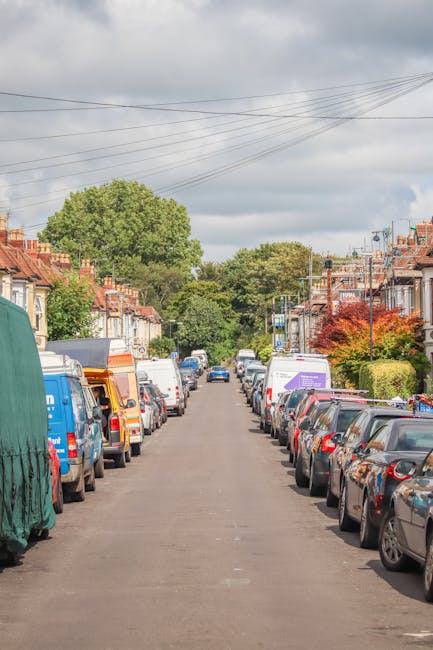
Enfield Town removals guide for narrow streets and terraced homes
If you are moving in Enfield Town, you already know the tricky bit is not always the packing. It is the street outside. Tight turns, parked cars, terraced rows, awkward front steps, and the occasional neighbour's wheelie bin placed exactly where you need to be. This Enfield Town removals guide for narrow streets and terraced homes is written for those very real conditions, so you can plan a calmer move and avoid the usual last-minute scramble.
Whether you are leaving a compact terrace, moving into a first-floor flat, or coordinating a full house removal on a road that feels about one van width too narrow, the right approach makes a massive difference. A bit of planning saves time, reduces damage risk, and keeps everyone in better spirits. Truth be told, on these streets, small details matter more than fancy promises.
In the sections below, you will find practical guidance on access, parking, packing, route planning, and the sorts of decisions that help a move run smoothly. If you want a broader view of available help, you can also look at the site's services overview and the dedicated removal services in Enfield page for context.
Table of Contents
- Why this kind of move needs a different plan
- How the move actually works in narrow streets
- Key benefits and practical advantages
- Who this guide is for
- Step-by-step guidance
- Expert tips for better results
- Common mistakes to avoid
- Tools, resources and recommendations
- Law, compliance and best practice
- Options and comparison table
- Case study example
- Practical checklist
- Conclusion
- Frequently asked questions
Why Enfield Town removals guide for narrow streets and terraced homes Matters
Enfield Town has a mix of terraced housing, older streets, and residential roads where access can change from one end of the road to the other. That is fine for everyday life, but removals day is different. A furniture truck that would be ideal on a wide suburban avenue can suddenly feel oversized when it meets a line of tightly parked cars and a narrow turning circle. And then, of course, there is the radiator by the hallway door that seems to know the sofa is coming.
This matters because removals are not just about lifting and loading. They are about access management, route planning, timing, and reducing friction at every point. If the vehicle cannot stop safely near the property, the crew spends more time carrying items farther. If the staircase is tight, bulky furniture may need partial dismantling. If the road is busy at school run time, your timetable can slip before a single box reaches the van.
For terraced homes in particular, the front entrance is often close to the street, the hallway can be narrow, and the internal layout may involve awkward turns or steep stairs. That means one wrong assumption can turn a straightforward move into a tiring one. In our experience, the most stressful removals are rarely the biggest ones; they are the ones where access was treated as an afterthought.
A good guide helps you think ahead. Not in a dramatic way, just sensibly. What size vehicle will actually fit? Where will it wait? Which items need extra protection? How do you avoid blocking neighbours? These are the questions that keep a move orderly and, frankly, less annoying for everyone involved.
How Enfield Town removals guide for narrow streets and terraced homes Works
The process starts before moving day. You assess the property, the road, the vehicle access, and the item list together. That sounds obvious, but people often look at those separately and miss the bigger picture. A three-seater sofa is not difficult in isolation. It becomes difficult when the hallway bends sharply and the van can only park halfway down the road.
For a typical terraced move, the work usually follows a simple sequence:
- Survey the access points. Check front door width, hallway bends, stair turns, and any rear entry option.
- Match the vehicle to the street. A smaller van may be easier than a larger lorry on a narrow road.
- Plan parking and loading. Decide where the vehicle can stop without causing problems.
- Prepare fragile or oversized items. Dismantle where sensible, wrap well, and label clearly.
- Sequence the load. Put heavier items in first, protect corners, and leave essentials accessible.
- Allow extra time for carry distance. This is the bit that catches people out. A longer walk from property to van can add a surprising amount of time.
In a narrow street, the best move is usually the one that removes uncertainty. That might mean choosing a man with van in Enfield for a smaller load, or booking a more structured house removals service if the property has more furniture and more access challenges. The right choice depends on volume, timing, and how much help you need on the day.
Some moves also benefit from temporary storage. If access is limited, or if you are waiting for keys, using storage in Enfield can take pressure off the day itself. It is not glamorous, but it does buy breathing room. And breathing room is underrated during a move.
Key Benefits and Practical Advantages
A well-planned removals approach for Enfield Town's tighter roads brings a few real advantages that are easy to feel on the day.
- Less wasted time: The crew can work in a clear sequence rather than improvising around blocked access.
- Lower damage risk: Fewer rushed turns and fewer awkward lifts mean furniture and walls are better protected.
- Less neighbour disruption: Thoughtful parking and timing reduce complaints and awkward conversations.
- Better protection for fragile items: When items are packed and loaded properly, they are less likely to shift in transit.
- More predictable costs: A move that starts with realistic access planning is less likely to run over time.
There is also a quieter benefit: the day feels more manageable. You know where the van will stop. You know which items are going first. You know the stairs are covered. That knowledge takes a lot of the edge off. To be fair, moving is still moving, but it becomes a lot less chaotic.
If you are comparing providers, it helps to look beyond basic transport and see whether they understand access issues, fragile furniture, and property layout. A service that regularly handles local moves should be able to explain how they would approach a terraced house, a narrow road, or a short-notice relocation. That is one reason many people start by reviewing removal companies in Enfield before deciding how much support they need.
Who This Is For and When It Makes Sense
This guide is useful for anyone moving in or around Enfield Town where access is not straightforward. That includes people in older terraces, small maisonettes, upper-floor flats, and homes with limited frontage. It is also helpful for landlords, students, first-time buyers, and families juggling school runs and moving schedules all at once.
You will probably find this especially useful if:
- your street has parked cars on both sides for much of the day
- your home has a narrow hallway or tight staircase
- you have large furniture, white goods, or delicate items to move
- you are working to a completion deadline
- you are coordinating a same-day handover
- you have limited parking outside the property
It also makes sense if you are downsizing. Terraced homes often look deceptively spacious from the outside, but once you begin measuring storage cupboards, landings, and loft access, the reality can be a little less generous. If you are going from a family house to a smaller flat, it may be worth looking at flat removals in Enfield for a more suitable approach.
Students moving into shared accommodation can benefit too. Smaller loads still need careful handling, especially where entryways are tight and lifts are absent. If that is your situation, student removals in Enfield may be the more practical fit. It is often the small jobs that get rushed, and that is where mistakes creep in.
Step-by-Step Guidance
A smooth move in a narrow street begins with method, not muscle. Here is a sensible step-by-step approach that works well in Enfield Town.
1. Measure the spaces that matter
Measure doorways, stair widths, landing corners, and any external gates. If you have a sofa, wardrobe, bed frame, or piano, check its dimensions too. Do not rely on memory. Memory lies. A tape measure does not.
2. Look at the street at the same time of day as your move
Street conditions can change through the day. A road that seems fine at 10 a.m. may be much busier later. If parking is tight, timing can be the difference between a clean loading process and a frustrating one. A quick walk at the right hour can save a lot of guessing.
3. Decide whether items need dismantling
Large wardrobes, bed frames, table legs, and shelving often move more easily when broken down. Dismantling is not always necessary, but it is usually worth considering if the staircase is awkward or the turn at the top of the stairs is tight. Keep screws and fittings in labelled bags; future-you will be grateful.
4. Pack by room and priority
Use room labels and mark boxes containing essentials. In terraced homes, the path from room to van can be slower than expected, so efficient packing matters. If you want a fuller packing plan, the site's packing and boxes in Enfield resource is a helpful starting point.
5. Reserve the easiest loading route
Choose the entrance and exit route that involves the fewest obstacles. That may mean using the front door instead of a side passage, or vice versa. It is a small decision that can change the tone of the whole day.
6. Keep a clear essentials box
Put kettle items, chargers, toiletries, keys, medication, and documents in one box or bag that stays with you. Moving day gets chaotic at about 2 p.m. if not sooner, so keeping essentials separate is one of those simple wins that feels almost smug.
7. Build in a buffer
Even a well-managed move can run a little late when access is tight. Give yourself breathing room for loading, carry distance, weather, and traffic. A little extra time is not pessimistic. It is realistic.
Expert Tips for Better Results
These are the small, practical things that tend to make a big difference.
- Protect corners before you start. Hallway corners, bannisters, and door frames are the usual victims in a tight move.
- Keep one person managing the route. In a narrow house, too many voices can slow everything down. One steady coordinator helps.
- Use furniture covers and blankets properly. Not loosely. Properly. A half-secured blanket is just a blanket that gets in the way.
- Separate delicate items early. Mirrors, glass shelves, lamps, and framed art should not wait until the last minute.
- Be realistic about vehicle size. A smaller van that can park legally and close to the property is often better than a larger vehicle that blocks the road.
- Tell the crew about awkward items in advance. Pianos, American-style fridges, and bulky sofas need planning, not surprise.
If your move includes specialist furniture, it is worth checking whether dedicated handling is needed. For example, a heavy upright piano may need a different method than a standard sofa. That is where piano removals in Enfield can be far more sensible than trying to improvise. Same with dining sets and large wardrobes; they are not all created equal, sadly.
Another useful tip: communicate with neighbours if the road is especially tight. A polite heads-up about van timing and loading windows can reduce friction. You do not need a community announcement. Just enough courtesy to keep things smooth.
Common Mistakes to Avoid
The biggest mistakes on narrow-street moves are usually the boring ones. Not dramatic. Just expensive or tiring.
- Underestimating access: Assuming the van can stop directly outside when there is no parking space to spare.
- Leaving packing too late: Last-minute boxing makes fragile items more vulnerable.
- Ignoring stair turns: A wardrobe that fits the room may still fail at the landing.
- Not measuring furniture: Eyeballing a sofa is a risky hobby.
- Booking the wrong size vehicle: Too small means extra trips; too large may cause access issues.
- Forgetting disposal and recycling: Unwanted items need a plan, especially during a busy move.
One mistake that catches people out is assuming storage or disposal can be dealt with after the move. In practice, if you have surplus furniture or a delayed completion, it is often cleaner to sort that in advance. The site's recycling and sustainability page is a sensible reminder to think about responsible disposal rather than leaving it all to the end.
Another common issue is choosing a service because it sounds simple rather than because it suits the property. A move with awkward stairs and limited parking does not always need the same setup as a straight swap between two modern builds. That sounds obvious, but people still do it all the time.
Tools, Resources and Recommendations
You do not need a van full of specialist kit, but a few useful tools can make the day far easier.
- Tape measure: For doorways, furniture, and turning spaces.
- Furniture blankets: To protect wood, painted edges, and corners.
- Straps or ties: Helpful for securing loads inside the vehicle.
- Labels and markers: A simple room labelling system keeps unpacking under control.
- Flat-pack tools: Screwdrivers, hex keys, and small bags for fittings.
- Protective gloves: Useful for grip and basic hand protection.
For many households, the most valuable resource is not a physical tool but the right service match. If you are moving a smaller load and want flexibility, a man and van in Enfield can be a practical option. If you want a fuller team and a more structured move, then a removals Enfield service may be better suited.
Some people also need short-term storage because keys are delayed or because the new place is not quite ready. In those cases, storage is not a fallback; it is part of the plan. That is especially useful when terraced-home furniture needs to be moved out in stages rather than all at once.
If you are comparing service styles, think in terms of load size, access difficulty, and urgency. Those three things usually tell you more than any marketing phrase ever will.
Law, Compliance, Standards, or Best Practice
For domestic removals in the UK, the practical focus is usually on safe handling, lawful parking, and clear communication rather than complex legal paperwork. That said, a professional removals process should still follow sensible standards. Vehicles should be loaded safely, items should be handled with care, and working methods should reflect reasonable health and safety practice.
If a road is narrow, the team should avoid unsafe stopping, blocked access, or manoeuvres that create avoidable risk for pedestrians, cyclists, and parked vehicles. In residential areas, especially where terraced homes are close together, courtesy and caution matter just as much as speed. You do not want a move that feels like a low-speed traffic incident. Nobody does.
Insurance is another point to understand. It is sensible to ask what is covered, how items are protected, and what the process is if something is damaged or lost. If you are comparing providers, review the available insurance and safety information carefully and read the terms and conditions so you know what to expect before the van arrives.
For sensitive handling, professional conduct, and complaint resolution, the site also provides relevant policy pages such as the health and safety policy and the complaints procedure. Those pages help build trust because they show there is a process behind the promise. That matters more than people sometimes admit.
Options, Methods, or Comparison Table
Not every Enfield Town move needs the same setup. Here is a simple comparison to help you think clearly.
| Move type | Best for | Strengths | Watch-outs |
|---|---|---|---|
| Man with van | Small to medium loads, flexible timing | Quick, practical, often easier on narrow roads | May not suit very large homes or heavy furniture |
| Man and van | Single-room moves, student loads, light furniture | Simple, efficient, usually cost-conscious | Less ideal for dismantling or complex access |
| Full house removals | Family homes, larger terraces, multi-room properties | More support, better for heavy or numerous items | Needs more planning around parking and access |
| Storage-assisted move | Delayed completions, downsizing, staged moves | Reduces pressure when timing is uncertain | Requires an extra step and careful item labelling |
If you are unsure which approach is right, a good starting point is the general removal van in Enfield option for smaller or more flexible moves, then step up to a more complete service when the access, volume, or timing demands it. Not every move needs the biggest solution. Sometimes that is the wrong tool entirely.
Case Study or Real-World Example
Picture a typical terraced home in Enfield Town on a road with limited parking and a sharp bend near the junction. The occupants have a double bed, a wardrobe, two bookcases, a dining table, and several boxes of kitchen items. Nothing outrageous. But the hallway is narrow, the stairwell turns tightly at the first landing, and the street is usually busy by late morning.
A sensible plan would start with a pre-move assessment. The wardrobe gets dismantled the day before. The bed frame is labelled and packed with its fixings. Fragile items are boxed separately. The crew books an earlier arrival time to reduce parking pressure. A smaller vehicle is chosen because it can stop closer to the property without blocking traffic. The large bookcases are carried one at a time, wrapped at the corners to protect the paintwork.
The result? Fewer trips, less strain, and a noticeably calmer move. No heroic sprinting. No frantic reshuffling. Just a tidy, well-managed process that fits the street rather than fighting it.
Now compare that with a rushed move where the van is too big, the sofa was not measured, and the wardrobe was left intact "because it'll probably fit." That version usually ends with a blocked pavement, a frustrated crew, and a lot of muttered apologies. Not ideal. Not at all.
Practical Checklist
Use this checklist a few days before the move. It is simple, but it catches the usual slip-ups.
- Measure doors, stairs, and large furniture.
- Check parking and street access at the likely move time.
- Decide whether bulky furniture needs dismantling.
- Label boxes by room and priority.
- Pack an essentials bag for the first 24 hours.
- Protect corners, bannisters, and door frames.
- Confirm vehicle size fits the street.
- Set aside items for storage, recycling, or disposal.
- Tell the removals team about fragile or awkward items.
- Keep keys, documents, and chargers with you.
Expert summary: In narrow streets and terraced homes, the best move is usually the one that is planned around access first and furniture second. Once the route, parking, and item sizes are aligned, everything else gets easier. It is a small shift in thinking, but it really changes the day.
Get a free quote today and see how much you can save.
Conclusion
Moving in Enfield Town does not have to feel cramped, rushed, or stressful. When you account for narrow streets, terraced layouts, and limited parking, you give yourself a far better chance of a smooth move. That is the whole point of this Enfield Town removals guide for narrow streets and terraced homes: practical thinking, honest planning, and fewer surprises on the day.
Start with the access. Measure what matters. Match the vehicle to the road. Pack in a way that makes sense for a tight property. If needed, use storage, choose a smaller van, or go for a fuller removals service. There is no prize for making it harder than it needs to be.
And if you are still at the planning stage, that is fine too. A good move begins a little before the boxes are taped up. One careful decision at a time, that's usually how these things come together.
Frequently Asked Questions
What is the best removals option for a narrow street in Enfield Town?
It depends on how much you are moving and how much access you have. Smaller loads often suit a man and van style service, while larger homes usually need a fuller removals setup. If parking is tight, vehicle size matters as much as capacity.
How do I know if my terraced home needs furniture dismantling?
If the hallway is narrow, the stairs turn sharply, or a large item is close to the width of a doorway, dismantling is usually worth considering. Wardrobes, bed frames, and shelving often move more safely when broken down.
Should I reserve parking for removals day?
Where possible, yes. The more limited the street, the more useful it is to plan parking in advance. Even if you cannot formally reserve it, knowing the best stopping point helps the process stay orderly.
Are small vans better than large removal lorries in Enfield Town?
Sometimes they are. A smaller van may be easier to position on a tight road and can reduce the carry distance from property to vehicle. The best choice is the one that fits both the street and the load.
What should I pack first for a terraced house move?
Start with non-essential items, then work room by room. Keep daily essentials, documents, chargers, and toiletries separate so they are easy to reach when you arrive at the new home.
How can I protect my walls and stairs during the move?
Use furniture blankets, corner protection, and clear carrying routes. If a staircase is especially tight, slow the pace and take turns carefully. A few extra minutes is cheaper than repairing chipped paint.
What if I need storage between moves?
Storage is often the right answer when keys are delayed, completion dates shift, or you are downsizing. It gives you flexibility and stops the entire move from being held hostage by timing issues.
Is a man and van service enough for a flat or small terrace?
Often, yes. For lighter loads, a man and van service can be a practical and efficient option. If you have bulky furniture or lots of boxes, you may need something more robust.
How far in advance should I book a removals service?
As early as you can, especially if your move date is tied to completion or school holidays. Narrow streets and terraced homes benefit from extra planning, not less.
What should I ask a removals company before booking?
Ask how they handle access issues, what vehicle sizes they use, how they protect furniture, and what insurance or safety procedures apply. It is also worth asking how they manage awkward items or parking restrictions.
Do I need to tell neighbours about the move?
You do not need to make a big announcement, but a quick heads-up can help, especially if the road is narrow or parking is scarce. A little courtesy goes a long way on busy residential streets.
Can I move on the same day I get my keys?
Yes, but only if the timing is well coordinated. Same-day moves can be successful, though they need tighter planning and a realistic schedule. If the property access is awkward, add buffer time and avoid rushing the load.